
A ruling should be proven, not predicted.
An LLM turns your question into a formal goal; a symbolic expert system proves it against reviewed evidence and weighs conflicts by explicit rule, not probability — then the LLM narrates the decided result, with reasons you can inspect.

Every citation carries a real authenticity grade. Formalized clauses stay marked unreviewed until a human checks them — nothing enters a live answer unvetted.
Can I eat carrion if I’m starving?
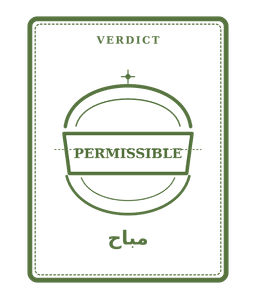
ruling(consume(carrion), H)
2:173 is specific (khass) to the compelled person, qualifying the general prohibition rather than being overridden by it.

Two systems, one answer
Neither half of this works alone. An LLM by itself will happily invent a citation; a symbolic reasoner by itself can’t parse a freeform question. Tarjih splits the job between them on purpose.
Language in, language out
Reads your freeform question and grounds it into a formal goal the reasoner can act on, then turns the engine’s verdict back into a readable explanation. It never decides the ruling itself.
A hand-authored knowledge base
A Prolog-style engine derives the ruling by explicit rule against a knowledge base of citable facts — deterministic and inspectable, so every step of the proof tree traces back to a real source.
How Tarjih reasons
Ground
Clarify the question and define the goal.
Prove
Build a transparent proof from sources.
Weigh
Resolve conflicts using established principles.
Narrate
Deliver a verdict with reasons and citations.
Small reviewed knowledge base — gaps are reported, never guessed.
94
Core clauses
0
Formalized clauses reviewed
Editor’s note
If evidence is missing or the knowledge base has no rule covering a question, Tarjih reports the gap instead of guessing an answer.
Not another chatbot
| A generic LLM chatbot | Tarjih | |
|---|---|---|
| How a ruling is reached | Predicted from training data | Derived by explicit rule against a cited knowledge base |
| Citations | Can be invented, wrong, or unverifiable | Every clause traces to a real, graded source |
| Missing coverage | Guesses an answer anyway | Reports the gap instead of guessing |
| Conflicting opinions | Picks one, usually without saying why | Shows both paths and the rule that weighed them |
| Can you check its work? | Only by asking it to explain itself | Yes — an inspectable reasoning tree, every time |